Having chronic back pain? It could be rare inflammatory arthritis

Published on
10 May 2021
Published by
The New Paper
Ankylosing spondylitis, a form of inflammatory arthritis, can be diagnosed early.
When Mr Tan Chun Hau first started experiencing back pain in March 2019, he dismissed it as a typical muscle ache.
As recommended by a polyclinic doctor, he took painkillers and applied plasters, expecting the discomfort to ease. Instead, the pain persisted and spread from his lower back area to his chest.
The 35-year-old mechanical engineer told The New Paper: "The pain in my chest made it very, very hard to breathe. I couldn't sleep well at night."
Over the next three months, Mr Tan had two X-ray tests, four electrocardiogram tests and one computerised tomography scan, but received inconclusive results.
It was only after a blood test in June 2019 that he was given a confirmed diagnosis of ankylosing spondylitis (AS), a rare type of inflammatory arthritis that affects the spine, back joints and pelvis.
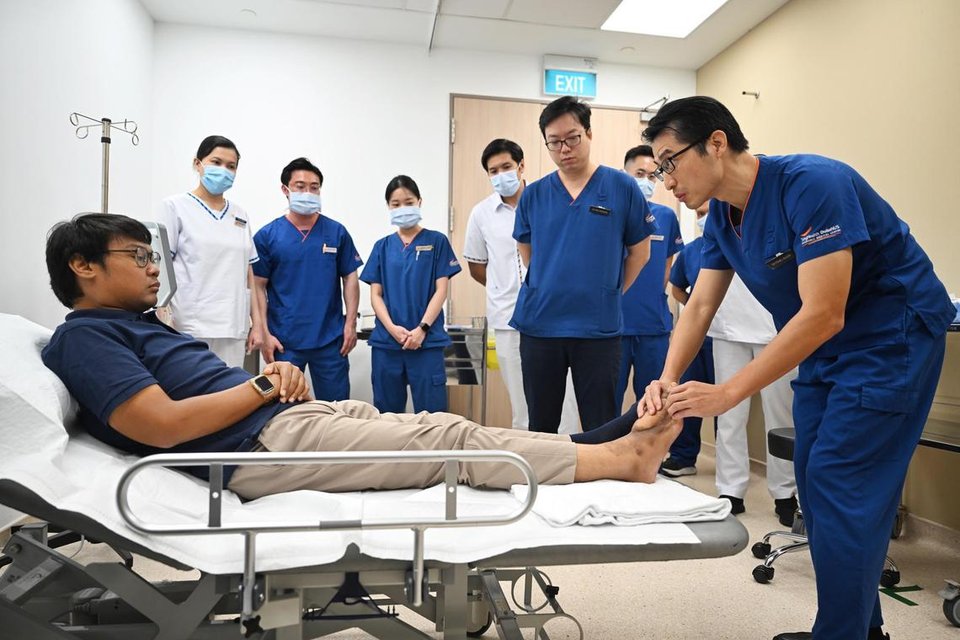
Dr Stanley Angkodjojo, a rheumatologist at Sengkang General Hospital and Mr Tan's specialist, told TNP that if left untreated, AS can cause the spine to fuse together, bringing about a progressive loss of spinal mobility and limitations in movements.
BREATHING DIFFICULTIES
Fusion can also cause the rib cage to become stiff, affecting chest expansion and create difficulties in breathing.
Of delayed treatment, he said: "None of the medication I could give would reverse the damage done to the spine".
In 2016, only around 7,900 patients were diagnosed with AS in Singapore, but there are still those struggling because of alack of a proper diagnosis, sub-optimal treatment, or poor control of their condition.
Around 90 per cent of AS patients suffer from sleep disturbance awakened by inflammatory pain.
And the prolonged inability to control AS symptoms not only causes work disability, but leads to decreased quality of life and leaves patients in poor psychological health.
As an engineer, Mr Tan's working hours can be long. Before receiving treatment, he sometimes had to stand in place for 30 seconds after getting up in order to "warm up" his back before he could walk.
He said he was often stressed by his inability to perform well at work because of his health.
His struggle with AS also took a toll on his relationship with his family - his wife and five-year-old son could not understand his frequent mood swings.
He and his wife now attend consultations together, and his son helpfully reminds him to take his medication.
While AS cannot be cured, symptoms can be alleviated.
Mr Tan's condition greatly improved after taking the biologic drugs that Dr Angkodjojo prescribed in May last year, and he can now jog and play light sports again.
With World AS Day taking place last Saturday, both men hope Mr Tan's story will raise awareness about AS so that people living with chronic pain would not have to do so in silence any longer and can identify the symptoms quicker.
Dr Angkodjojo said: "Have a conversation with your primary doctor, who can be a great resource to help you navigate the growing landscape of information available out there."
As for Mr Tan's advice for others like him, he said: "Just be positive... (and) don't give up."
Source: The New Paper © Singapore Press Holdings Limited. Reproduced with permission.
ALL views, content, information and/or materials expressed / presented by any third party apart from Council For Third Age, belong strictly to such third party. Any such third party views, content, information and/or materials provided herein are for convenience and/or general information purposes only. Council For Third Age shall not be responsible nor liable for any injury, loss or damage whatsoever arising directly or indirectly howsoever in connection with or as a result of any person accessing or acting on any such views, content, information and/or materials. Such third party views, content, information and/or materials do not imply and shall not be construed as a representation, warranty, endorsement and/or verification by Council For Third Age in respect of such views, content, information and/or materials.