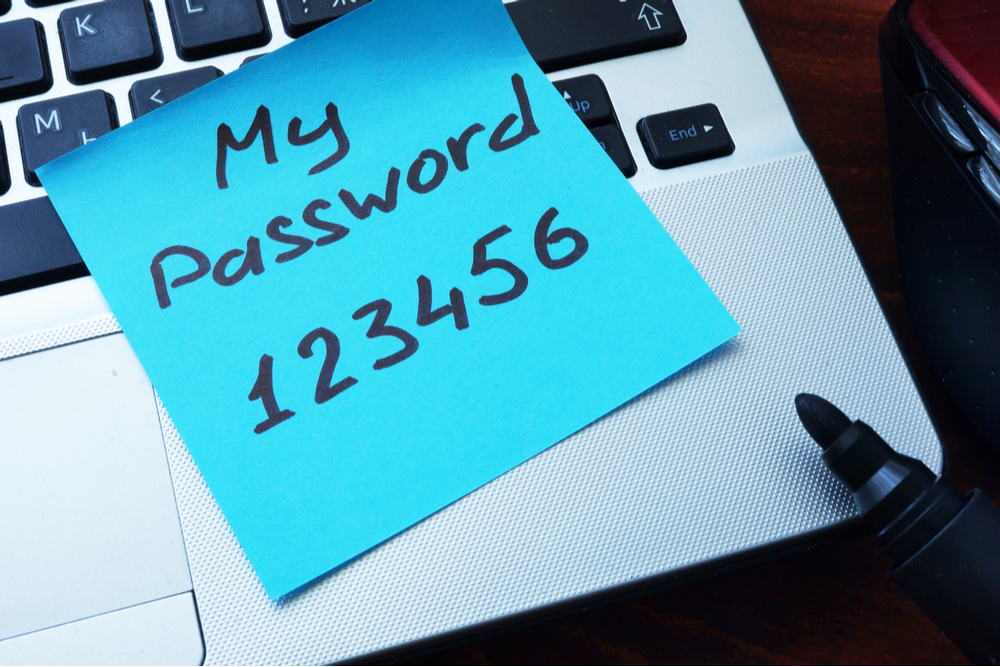
Do your loved ones know your passwords?
Published on
24 Oct 2021
Published by
The Straits Times
SINGAPORE - If you are reading this on your mobile phone or tablet, here's a question to test your financial planning: Do other members of your household know your sign-in name and password to this subscription?
If your answer is "yes", congratulations for being among the minority here who share access to their digital accounts with their loved ones. It makes sense to pass on the details of subscriptions to your family so that they too can enjoy the services.
But the reality is that many people fail to even do this simple step - while they do the log-ins for digital services such as movies, music, news and other contents available on common devices, other members in their households don't know the passwords.
The others also don't bother to ask for passwords because they can access these services so long as no one shuts down the accounts.
But if these devices need a reboot and the subscribers are not available to key in the passwords, their families will not be able to access these services.
This is the finding of a recent survey by the Society of Trust and Estate Practitioners (Step) which found that most Singaporeans have not really thought about sharing information relating to their digital assets, even with their loved ones.
So if you don't even share passwords of subscription services, chances are no one in your family will know about the access codes to your more important digital accounts.
This is especially disconcerting considering that almost 97 per cent of folks here have a variety of digital assets, including online bank accounts, investments, official services that involve Singpass as well as access to e-mail, social media, blogs and entertainment services such as Apple, Amazon and Netflix.
Balance between privacy and planning
Of course, when you are hale and healthy, you are unlikely to share your passwords to personal accounts freely, due to privacy concerns.
But good planning means preparing for worst-case scenarios too, such as when a person is laid out by illness or accident, or even sudden death.
Money in bank accounts are commonly mentioned in wills and so these assets are easier to trace. But many people tend to forget about other equally important accounts and not keeping a record of these assets makes it hard for their relatives to find them.
For instance, if you have a digital trading account that you use to make your investments, you are unlikely to make a note of what shares you have and in what amounts because these assets will change so long as you are still trading.
So the only way for your relatives to uncover these details is when they have access to your online accounts, especially if you have several of them.
Things get even more complicated for those who make a living out of their personal social media accounts, which are exclusive to the owners, with access usually not allowed to even relatives.
"This is a major cause for concern as legislation regarding digital assets and their transferability or access by executors or beneficiaries on death does not exist in Singapore, a situation found in most other countries as well," the researchers of the Step survey noted.
Here are two concerns you should be aware of.
1. Access to social media accounts
A major problem is that companies operating in the digital asset space have different policies in dealing with accounts belonging to deceased users, the researchers found.
In most cases, to shut down an account, a close family member must produce proof such as a death certificate, to show that they have the right to ask for the account to be terminated. But this doesn't mean that the relatives can get access to the content of the accounts.
In some cases there is automatic termination of the account if the platforms receive news that the account holder has died. But this procedure is certainly not foolproof because most of these private platforms do not have access to the national death registry.
This is probably why many friends and business contacts of deceased people continue to receive celebratory notices relating to work and other anniversaries, even though the account holders have been dead for years.
Things are even more dicey when the owners are still alive but are unable to access those accounts due to serious medical conditions or even dementia.
It remains to be seen whether social media companies will recognise legal tools such as Lasting Power of Attorney to allow representatives of account holders to deal with their accounts.
"Frankly, instead of banking on the legal route, I would advise my clients that it is sometimes more practical to leave details of their accounts with their trusted kin if they want to get things done faster and more efficiently," says a lawyer specialising in estate matters.
2. Rights of digital contents
Many of us probably don't think twice about buying a song or a movie online these days because the advent of major players such as Apple and Amazon have made such transactions a breeze.
While music CDs have already gone the way of the dinosaurs, digital movies are slowly but surely edging out films in DVD and Blu-ray formats. This is because the online versions are not only cheaper, but they are also available "free" for those who subscribe to various movie platforms.
But for those who pay to collect their favourite songs and movies, here's the rub - you do not actually own these digital assets.
Yes, this content may have been downloaded on to your phones or other gadgets, but it is not transferable to others. And you also cannot pass on your vast digital library to your beneficiaries.
If you read the terms of the purchase, you will notice that you have only paid for a "licence" to use such content and such permission can be revoked if there is a dispute between the platform owner and the owner of the films.
This also means that the movie nights will end with you, and your descendants will not be able enjoy the "oldies" that you have amassed.
So, if you really love your movie collection and you want to make sure it stays with your family for as long as possible, stick to physical formats - just make sure you hoard a few new players as well in case these are no longer sold in a decade or two.
What you should do
Just like your physical assets, online assets are increasingly getting more important: If cryptocurrency continues to hold its value in the future, this is certainly one asset that you cannot ignore when you discuss your will and estate matters with your lawyers.
Just remember this: If you cannot do without things that require technology, make sure you plan for it, such as letting trusted people have emergency access to your e-mail because many people use these for important work and personal communications.
Technology not only disrupts businesses, but it can also make life difficult if you choose to ignore it.
Source: The Straits Times © Singapore Press Holdings Limited. Reproduced with permission.
ALL views, content, information and/or materials expressed / presented by any third party apart from Council For Third Age, belong strictly to such third party. Any such third party views, content, information and/or materials provided herein are for convenience and/or general information purposes only. Council For Third Age shall not be responsible nor liable for any injury, loss or damage whatsoever arising directly or indirectly howsoever in connection with or as a result of any person accessing or acting on any such views, content, information and/or materials. Such third party views, content, information and/or materials do not imply and shall not be construed as a representation, warranty, endorsement and/or verification by Council For Third Age in respect of such views, content, information and/or materials.